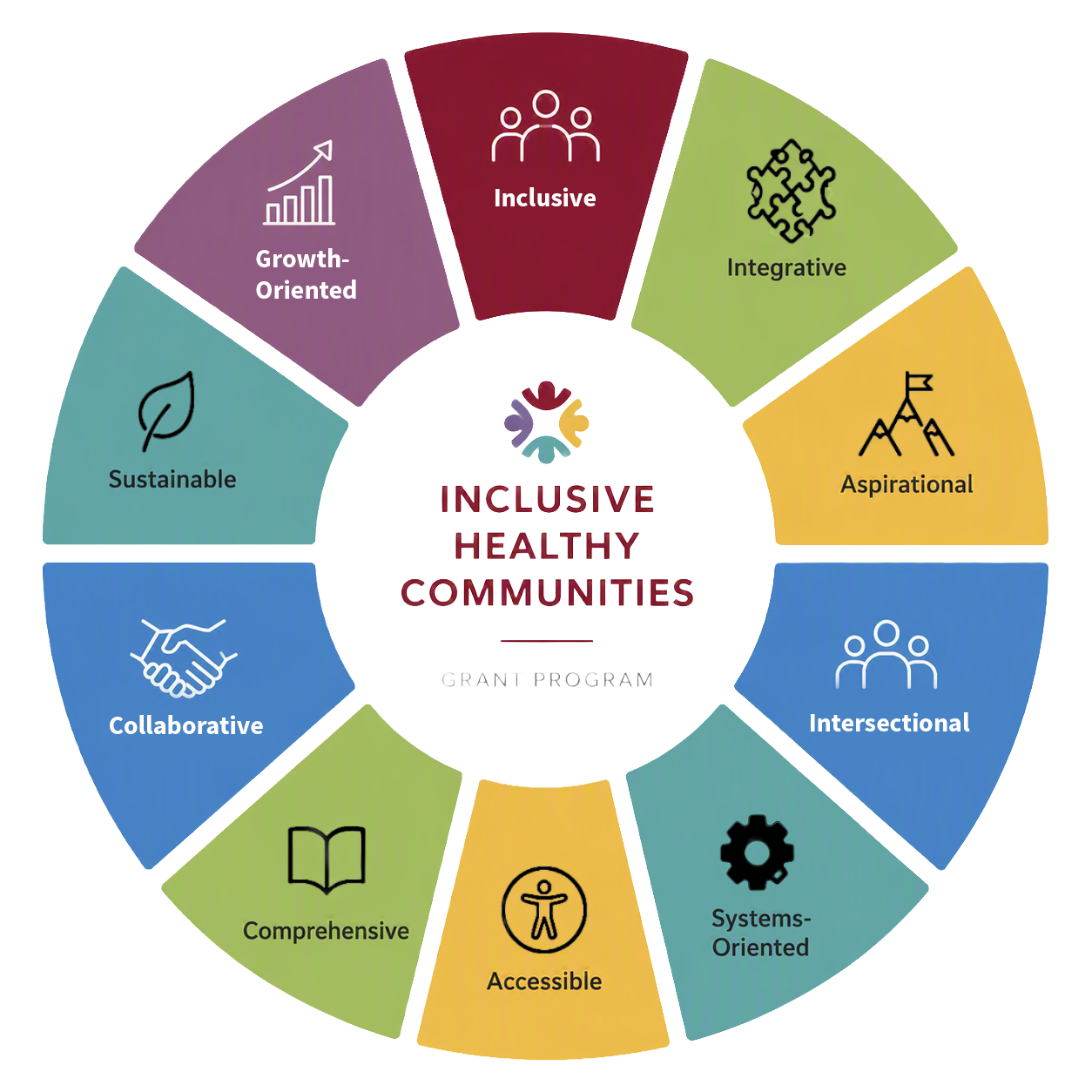
IHC Vision, Mission, and Guiding Principles
The Inclusive Healthy Communities (IHC) Grant Program vision is to advance New Jersey as a national leader in embodying the ideals of true and universal inclusion, where people with disabilities enjoy opportunities to lead full, healthy, and meaningful lives free from stigma and barriers. Through innovative and lasting solutions developed with the leadership of people with disabilities and supported by cross-sectoral partnerships, New Jersey will serve as a beacon to inspire other states to tackle inequities in the social and structural determinants of health by prioritizing intersectional disability justice within their own communities.
The mission of IHC is to advance initiatives that seek to address unjust societal systems that cause and exacerbate disparities in health and wellbeing among people with disabilities. By centering the expertise of people with lived experiences of disabilities, creating a cross-sectoral community of practice united toward universal inclusion, and targeting changes to policies, systems, and environments, IHC initiatives work to ensure sustainable, meaningful change toward the development of fully inclusive healthy communities throughout New Jersey and beyond.
10 Guiding Principles for Inclusive Healthy Communities Initiatives
1. Inclusive – People with disabilities have the right to lead and participate in planning and decision-making processes through engagement that is upfront, ongoing, meaningful and authentic.
2. Integrative – IHC initiatives advance full and culturally competent integration of people with disabilities alongside people without disabilities, as equal members of society, groups, and environments, with equitable access to conditions and systems that support health and wellbeing, free from limitations imposed through stigma and ableism.
3. Aspirational – IHC initiatives go beyond compliance and minimum regulatory standards to advance bold, just, and innovative solutions that ensure equitable and permanent access to the social and structural determinants that drive health and wellbeing.
4. Intersectional – IHC initiatives seek to advance social justice and to ensure that people with disabilities leading initiatives and providing expertise come from a diverse range of backgrounds, representative of our communities, with consideration inclusive of, but not limited to race, sex, gender, sexual orientation, socioeconomic status, age, language, and cultural background.
5. Systems-Oriented – While individual IHC initiatives may include programmatic components that target specific services or barriers, those components are nested in broader goals of advancing change in systems, operations, and policies that drive access to the conditions, structures, and processes contributing to health and wellbeing. Systems changes targeted by IHC initiatives may include changes to public policies as well as changes to the decision-making and operational processes of organizations and groups, whether in the public, private, or non-profit sectors, including within grantee organizations.
6. Accessible – True inclusion requires providing access in ways that work for everyone. To the greatest extent possible, this should be done routinely as a systematic process providing access to information and environments as universally as possible, as aligned with inclusive and universal design principles, using accommodations to augment these processes as necessary.
7. Comprehensive—While some initiatives target the inclusion of people with specific disabilities, each initiative must strive to be fully inclusive, considering those who experience multiple disabilities and health conditions by addressing the full spectrum of accessibility for the whole person.
8. Collaborative – Strong cross-sector partnerships, inclusive of people with disabilities, lead to innovative solutions uniquely positioned to create sustainable systems change in support of the wellbeing of people with disabilities.
9. Sustainable – IHC initiatives seek to catalyze permanent changes to the systems, policies, and conditions that drive health and wellbeing for people with disabilities, leaving a legacy of improved access and inclusion beyond the award period.
10. Growth-Oriented – Advancing meaningful change requires a commitment from IHC partners to implement near-term solutions while continuously striving to advance their content knowledge, skills, and capacity to build long-lasting, adaptable, and transformative solutions well into the future.